Not everyone has a spare room to turn into a home office—and that’s okay.
Today's homes often need to serve more than one purpose. A dining table becomes a desk during the week. A guest room doubles as a workspace. Even an unused corner can become a productive office with the right setup.
A functional home office isn't defined by square footage—it's defined by how well the space works for you.
Whether you work remotely full-time or simply need a place to handle emails and everyday tasks, these home office ideas will help you create a workspace that's organized, comfortable, and easy to live with. If you're looking for furniture that combines flexibility, comfort, and modern design, explore our Home Office Collection for workspace solutions designed to fit the way you live.

1. Choose Furniture That Pulls Its Weight
When space is limited, every piece of home office furniture should earn its place.
Instead of filling the room with a separate desk, filing cabinet, and storage cart, look for furniture that serves multiple purposes.
A desk with built-in storage keeps everyday essentials close without adding visual clutter. A flexible piece like our 360° Rotating Standing Desk gives you extra workspace when you need it and rotates back into a compact footprint when you don't. It's an easy way to make a smaller home office setup feel more capable without taking up additional room.
The less visual weight your furniture adds, the more open and inviting the room will feel.
2. Turn an Awkward Corner Into a Real Workspace
Corners are often overlooked, but they're some of the easiest spaces to transform into productive work areas.
A desk tucked into the corner of a bedroom, living room, or even a wide hallway can create a dedicated work zone without changing the entire room.
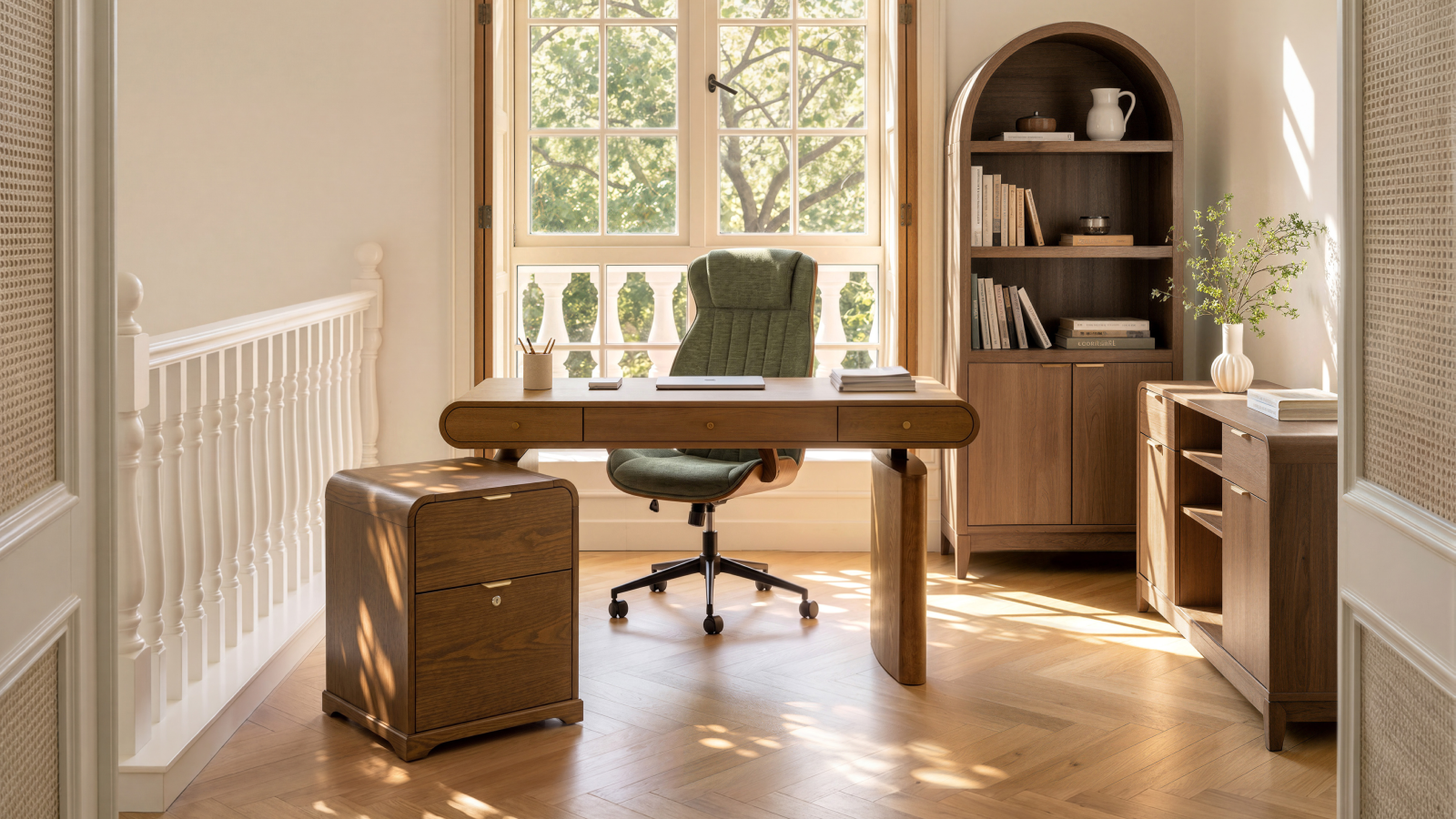
If you can position your desk near a window, even better. Natural light helps brighten the space, reduces eye strain during long work sessions, and makes the room feel more welcoming.
Sometimes the best home office setup isn't a separate room—it's simply making better use of the space you already have.
3. Think Vertically
When you can't spread out, build upward.
Floating shelves, pegboards, wall organizers, and tall cabinets add valuable storage without taking over the floor.
Vertical storage works especially well in compact home office setups because it keeps books, office supplies, and everyday essentials within easy reach while freeing up desk space.
Keeping the floor clear also makes the room feel larger and easier to move around.
Open shelving is also a great place to display framed artwork, family photos, or a few decorative pieces that make your workspace feel personal.

4. Keep the Layout Flexible
Work rarely looks the same every day.
Some days are filled with video meetings. Others are spent organizing paperwork, helping with homework, or tackling creative projects. Your workspace should be able to adapt just as easily.
Furniture that adjusts to different tasks makes a noticeable difference. A rotating desk lets you expand your workspace when you need extra room, then rotate it back into a cleaner, more compact layout once you're finished.
Instead of feeling like a fixed office, your workspace becomes a natural part of your daily routine.

5. Cut Down on Visual Clutter
A tidy workspace feels calmer—and it's often easier to focus in one.
Rather than letting chargers, notebooks, headphones, and paperwork accumulate across your desk, create a few simple organizational systems that make cleanup effortless.
Drawer organizers, cable clips, trays, and storage boxes can all help reduce visual clutter without taking up much space.
Your workspace doesn't need to be perfectly minimal—it simply needs to support the way you work.
6. Add a Few Personal Touches
A workspace should feel like part of your home, not an afterthought.
A supportive chair, a textured rug, a small plant, or artwork you genuinely enjoy can instantly make the room feel warmer and more inviting.
Thoughtfully chosen home office furniture paired with personal details helps create a space that's both comfortable and motivating. These small touches can make it easier to settle in, stay focused, and enjoy spending time there.
The goal isn't to recreate a showroom. It's to build a workspace that reflects your lifestyle.
7. Buy Furniture That Can Grow With You
One of the easiest mistakes is buying furniture that only solves today's problem.
Life changes. You may move to a new home, start working remotely more often, or completely rearrange your living space.
Choosing adaptable home office furniture gives you the flexibility to evolve without replacing everything.
At Hulala Home, flexibility is built into the design. Pieces like the 360° Rotating Standing Desk are designed to adapt to changing layouts while maintaining a clean, furniture-inspired aesthetic that fits naturally into everyday homes.
It's not just about saving space today—it's about investing in furniture that still works beautifully years from now.

A Well-Planned Workspace Can Do a Lot
A home office doesn't need to be large to be highly functional.
What matters most is how well it supports your daily routine, helps you stay focused, and fits naturally into the rest of your home.
With multifunctional furniture, smart storage, vertical organization, and a flexible layout, even a compact workspace can feel comfortable, efficient, and inspiring.
Great home office design isn't about having more space—it's about making every inch work smarter.
Explore our collection of thoughtfully designed home office furniture to find a workspace solution that fits your home and your lifestyle.
FAQs
What is the best desk for a compact home office?
A desk that combines flexibility with practical storage is often the best choice. A 360° rotating standing desk can expand your workspace when needed while maintaining a compact footprint for everyday use.
How can I make a compact home office feel bigger?
Maximize natural light, use vertical storage, keep the floor as open as possible, and choose furniture with a lighter visual profile. A simple color palette and multifunctional furniture can also help the room feel more spacious.
Where should I put a home office if I don't have a spare room?
Many people create successful home office setups in bedroom corners, living rooms, under staircases, or unused alcoves. The key is choosing a location that blends naturally with your home's existing layout while providing enough space to stay productive.
Is multifunctional furniture worth it for a home office?
Absolutely. Multifunctional home office furniture helps maximize limited space, reduce clutter, and adapt to changing routines, making it a smart long-term investment for modern homes.