In today’s homes, furniture is everywhere, but personality is rare.
Scroll through social media or browse mainstream furniture catalogs, and you’ll notice the same patterns repeating: perfectly smooth surfaces, predictable wood tones, identical grain prints, and safe, uniform finishes. While this approach offers convenience and consistency, it has also created something many homeowners now feel but can’t always describe — a sense of visual sameness.
As we move toward 2026, that feeling is changing the way people think about furniture. Design is shifting away from “perfect” and toward personal. And in that shift, burl wood is becoming increasingly relevant.

Why “Perfect” Furniture Now Feels Flat
For years, furniture design chased perfection. Flawless finishes. Symmetrical lines. Repeated textures. The goal was efficiency, scalability, and affordability.
But perfection has a downside. When everything looks flawless, everything also looks the same. Homes start to feel styled rather than lived in. Safe rather than expressive. Visually quiet in a way that feels empty, not calm.
This is why many modern interiors now feel incomplete despite being beautifully styled. They lack texture, depth, and imperfection, these very qualities that make a space feel human.
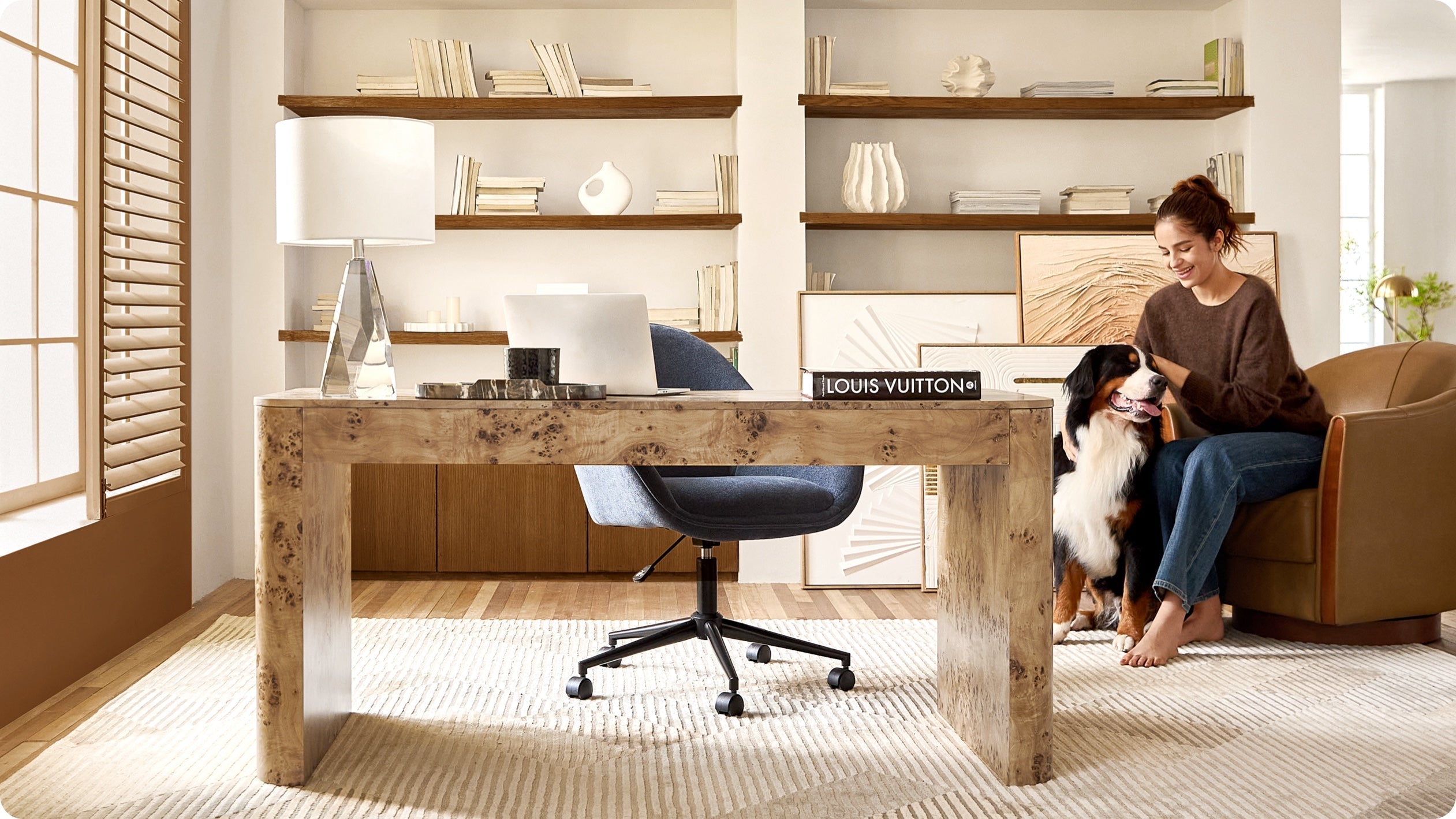
Burl wood introduces that depth naturally. Its grain doesn’t try to disappear. It invites attention without being loud. It adds movement to a space without clutter.
What Is Burl Wood, and Why Is It Fundamentally Different?
Burl wood is not a species of wood. It’s a natural phenomenon.
Burls form when a tree undergoes stress, caused by environmental changes, fungus, injury, or irregular growth patterns. Instead of growing in neat, straight lines, the wood fibers bend, twist, and compress into dense, expressive patterns. The result is a surface that feels alive —swirling, cloudlike, unpredictable.
Ordinary furniture wood is chosen and processed for consistency. The goal is repetition: repeatable grains, uniform coloration, stable patterns that look the same from piece to piece. Burl wood moves in the opposite direction. Its value lies in irreproducibility.
This is the key difference:
●Ordinary furniture is designed for uniformity.
●Burl wood is shaped by nature’s unpredictability.
No two burl patterns are the same. Every surface tells a different visual story, shaped by years of natural growth.
This is more than a visual difference. It is a philosophical one: ordinary furniture prioritizes control, burl wood embodies character.
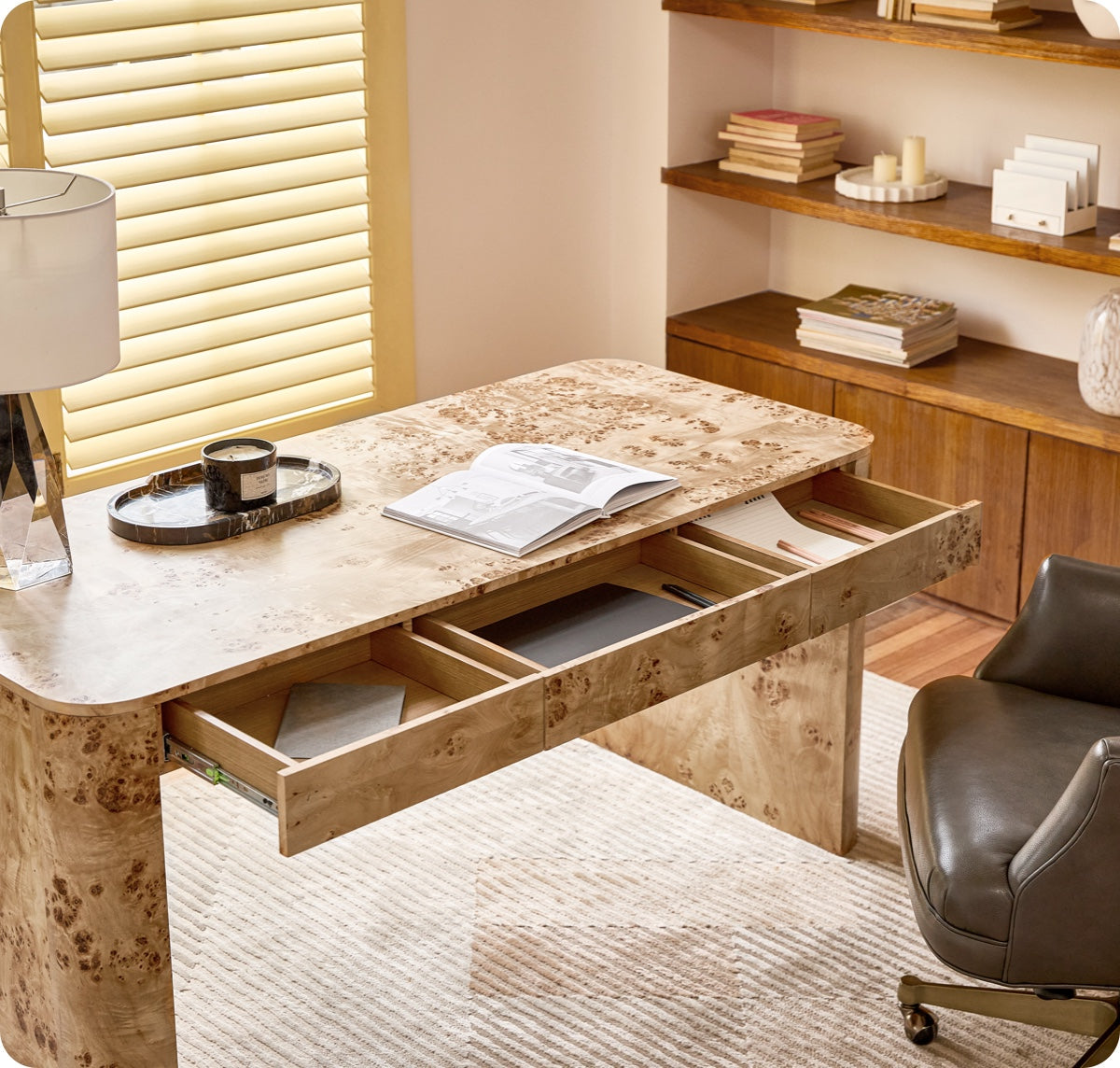
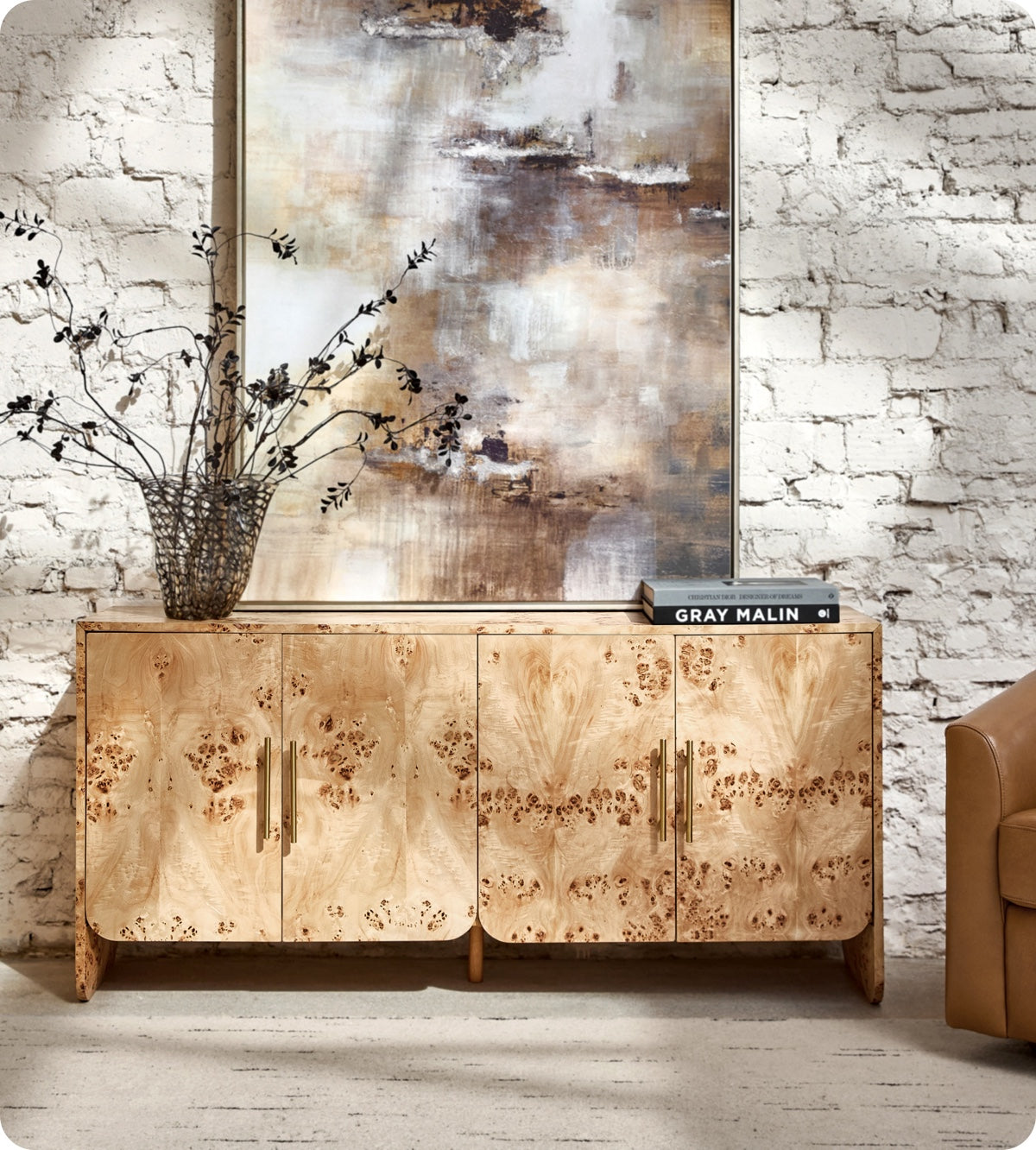
Burl Wood VS Ordinary Furniture: A Shift in How We Value Things
Mass-produced furniture focuses on efficiency:
● Fast replacement: built to fit short product cycles and ever-changing trends.
● Easy production: standardized materials, predictable shapes, and streamlined assembly.
● Predictable looks: visually tidy, but rarely surprising.
● Limited emotional resonance: you use it, it works, but it rarely becomes part of your story.
Burl wood furniture focuses on presence and feeling:
● Longevity: dense, resilient, and meant to age with you rather than expire.
● Individuality: every surface shaped by nature’s irregularities, never repeated.
● Emotional attachment: the more you live with it, the more its complexity reveals itself.
● Material honesty: what you see is what the tree lived through: stress, recovery, time.
One is designed to serve a moment.
The other is designed to stay, to grow with the home and enrich it over time.
As more people choose sustainable, thoughtful living, furniture evolves from a functional purchase into something that anchors the space—quiet, grounding, and distinctly personal.
Burl Wood Styling Tips for Interiors
Introducing burl wood into your home isn’t about overwhelming the room, it’s about letting its natural complexity speak with intention. Because every burl surface is visually dynamic, the key is to style it in a way that highlights its depth while maintaining balance and cohesion.
1/Living Rooms: Let One Statement Piece Lead
A burl wood console, side table, or coffee table naturally becomes a focal point without needing bold color or heavy decoration. Pair it with:
●Soft, neutral seating (creams, warm taupes, muted greys).
●Rounded silhouettes and gentle textiles.
●Minimal decor on top, one sculptural vase, a ceramic bowl, or a small plant is enough.
This gives the burl space to breathe and keeps the room feeling calm rather than crowded.
2/Bedrooms: Add Warmth Through Subtle Accents
Burl wood works beautifully in spaces where texture matters.
●Consider a burl nightstand, dresser, or decorative tray.
●Layer with linen bedding, woven throws, and warm lighting for softness.
●Keep color palettes quiet, sand, oat, ivory, and warm brown tones.
The result is a space that feels grounded, warm, and visually rich without becoming heavy.
3/Dining Areas: Anchor the Room with Depth
A burl dining table or console can become the visual anchor of the entire space.
●Pair with metal or glass accents for a modern contrast.
●Keep chairs simple, clean-lined upholstery or natural wood.
●Add soft ambient lighting (pendants or low warm lights) to highlight the grain’s movement.
This creates a dining area that feels intentional and artful.
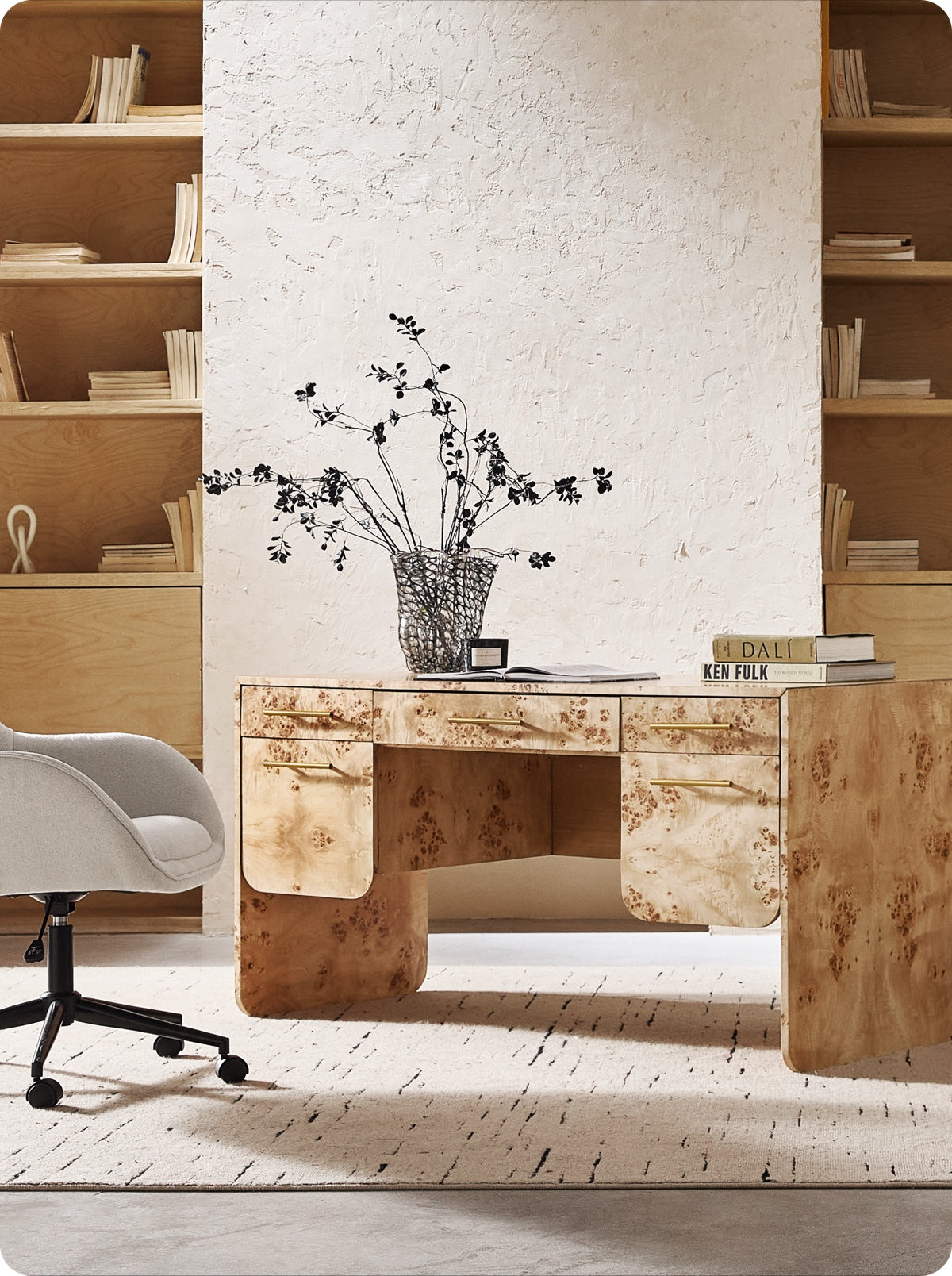
As design trends shift and our homes become more personal than ever, the pieces we bring into them carry deeper meaning. Burl wood stands out not because it tries to impress, but because it brings something irreplaceable into a space—texture, memory, and an unmistakable sense of character.
Whether you introduce it through a single accent piece or let it anchor an entire room, burl wood has a way of grounding a home while giving it soul. It reminds us that beauty doesn’t have to be perfect to be powerful; sometimes the most captivating details are the ones shaped by time and nature.
In a world filled with look-alike furniture and repeated patterns, choosing something truly unique becomes more than a style choice. It’s a simple way to make your home feel more personal, more expressive, and unmistakably your own.