Choosing a sofa is about more than finding a style you like. The right sofa should fit your living space, support your daily routines, and make it easier to relax, entertain, and spend time with family.
Two popular options are reclining sofas and modular sofas. A reclining sofa focuses on adjustable seating and personalized comfort, while a modular sofa offers flexibility through individual sections that can be arranged to suit different spaces and needs.
But the choice is not always straightforward. What if you have a small living room? What if your family needs extra seating for guests? Or what if you want a sofa that can accommodate changing routines over time?
In this guide, we'll compare reclining sofas vs. modular sofas, explain their advantages and limitations, and help you decide which option makes the most sense for your home.
Reclining Sofa vs. Modular Sofa: What's the Difference?
The main difference between a reclining sofa and a modular sofa is what each design prioritizes.
A reclining sofa is designed to improve relaxation by allowing one or more seats to recline. Depending on the model, this may involve a manual mechanism, an electric motor, an adjustable footrest, or a power headrest.
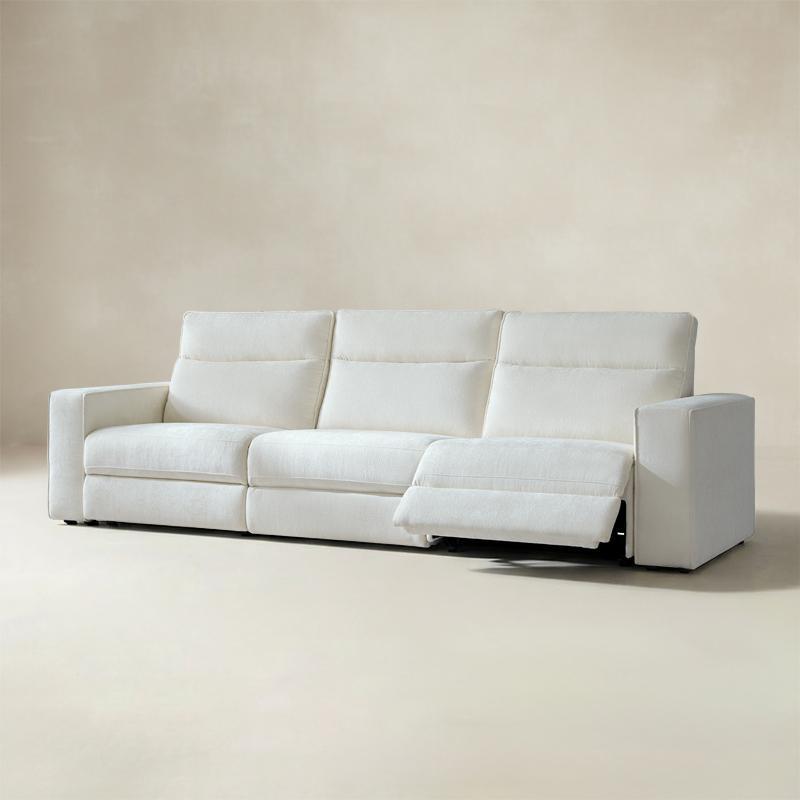
A modular sofa is made up of separate sections, such as corner units, armless seats, chaises, and ottomans. These components can be combined in different configurations to fit your room and seating requirements.
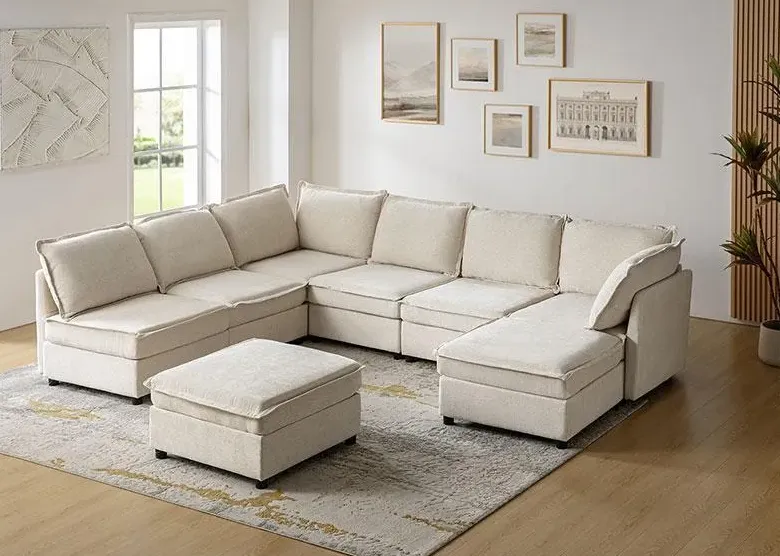
Here's a quick comparison.
|
Feature |
Reclining Sofa |
Modular Sofa |
|
Main purpose |
Personalized relaxation and reclining comfort |
Flexible seating and room layouts |
|
Seating positions |
Adjustable on equipped seats |
Depends on the design and included modules |
|
Layout flexibility |
Usually more fixed |
Often highly configurable |
|
Space requirements |
Needs clearance for reclining, depending on the mechanism |
Needs sufficient floor space for the chosen configuration |
|
Best for |
Relaxing, watching TV, reading, and resting |
Entertaining, family gatherings, and changing seating needs |
|
Moving and rearranging |
Often heavier and more difficult to reposition |
Individual modules may be easier to move |
|
Long-term adaptability |
Depends on the features and construction |
Can offer layout flexibility when compatible modules are available |
One important detail: these categories are not mutually exclusive. Some modular sofas include reclining seats, while some reclining sofas offer modular or sectional configurations. The best choice depends on which features matter most to you.
1. Comfort: Is a Reclining Sofa Better for Relaxing?
If comfort is your main priority, a reclining sofa deserves a closer look.
How a reclining sofa supports relaxation
A reclining sofa lets you change your seating position instead of remaining upright throughout the evening. Depending on its design, you may be able to raise a footrest, lean back, or adjust the headrest to find a more comfortable position.
This can be useful when you regularly:
- Watch movies or television for extended periods.
- Read or listen to music in the evening.
- Take short breaks between work and household responsibilities.
- Prefer to stretch out rather than sit upright.
- Share a sofa with family members who have different comfort preferences.
Power reclining models can make adjustments easier, particularly when they include independently controlled seats or adjustable headrests.
However, not every reclining sofa offers the same experience. Check the available adjustment range, seat depth, cushion firmness, back support, and whether each seat reclines independently.
Can a modular sofa be just as comfortable?
Absolutely. A modular sofa can offer deep cushions, supportive backrests, generous seating space, and chaise sections for stretching out.
Its comfort depends more on the specific design than on the modular construction itself.
For example, a modular sofa with a spacious chaise may be ideal if you enjoy lying down while watching television. A deep sectional may also provide enough room for several family members to relax together.
Choose a reclining sofa if: You want adjustable seating positions and a more personalized way to relax.
Choose a modular sofa if: You prefer spacious lounging areas, flexible seating arrangements, or room for several people to relax together.
2. Space and Layout: Which Sofa Fits Your Living Room Better?
A sofa can look perfect in a showroom but feel awkward in your home if it doesn't suit the room's dimensions or layout.
Reclining sofas need room to move
One of the most important considerations when buying a reclining sofa is clearance.
Some models extend backward as they recline, while wall-hugger designs move forward or use mechanisms that reduce the space required behind the sofa. Even these designs may need room in front for the footrest.
Before purchasing, check:
- The sofa's dimensions in its upright position.
- The distance required behind and in front of the sofa when fully reclined.
- The location of walls, coffee tables, and other furniture.
- Access to electrical outlets if you choose a power reclining model.
- Whether the sofa can pass through doorways, hallways, and stairwells.
A reclining sofa can work well in a smaller living room, but only if its mechanism and dimensions fit the available space.
Modular sofas offer more layout options
Modular sofas are especially useful when your living room has an unusual shape or when you want to change the arrangement of your furniture.
Depending on the system, you might arrange the modules as:
- An L-shaped sectional for a corner.
- A U-shaped configuration for a large family room.
- A straight sofa along one wall.
- Separate seating sections for an open-plan living area.
Some systems also allow additional modules to be purchased later. However, this depends on module compatibility, product availability, and whether the manufacturer continues to offer the same design.
Modular furniture is not automatically space-saving. A large sectional can occupy more floor space than a compact reclining loveseat, so measure the intended configuration before buying.
Choose a reclining sofa if: Your room layout is relatively settled and you can accommodate the reclining mechanism.
Choose a modular sofa if: You need more control over the seating arrangement or want to make better use of an irregular space.
3. Everyday Functionality: How Will You Actually Use Your Sofa?
The right sofa should work for the way you live, not just the way your living room looks.
When a reclining sofa makes everyday life easier
A reclining sofa is a strong option for households that use the living room primarily for rest and entertainment.
Imagine coming home after a long workday. You want to watch a show, put your feet up, and relax without rearranging cushions or moving an ottoman. A reclining seat makes that transition simple.
It can also be useful for couples or family members who prefer different seating positions. If the sofa has independent reclining seats, one person can sit upright while another reclines.
However, reclining mechanisms introduce additional moving parts. Depending on the model, these may require electrical connections, occasional maintenance, or more involved repairs than a simple fixed sofa.
When a modular sofa makes everyday life easier
A modular sofa can be more versatile when the living room serves several purposes.
During the day, it may provide a comfortable place to read, work on a laptop, or supervise children playing nearby. When friends visit, the seating can accommodate a group. For a family gathering, a larger sectional can help everyone sit together.
Modular designs are particularly useful for people who enjoy changing their living space or anticipate that their seating needs may evolve.
Still, flexibility has limits. Not every modular sofa can be rearranged into every possible shape, and some modules may require connectors or specific placements to remain stable.
Choose based on your routines: A reclining sofa prioritizes how you sit and relax. A modular sofa prioritizes how your seating fits different activities and room arrangements.
4. Long-Term Value: Which Sofa Can Adapt as Your Needs Change?
A sofa is a significant furniture purchase, so it makes sense to consider how well it will serve you over time.
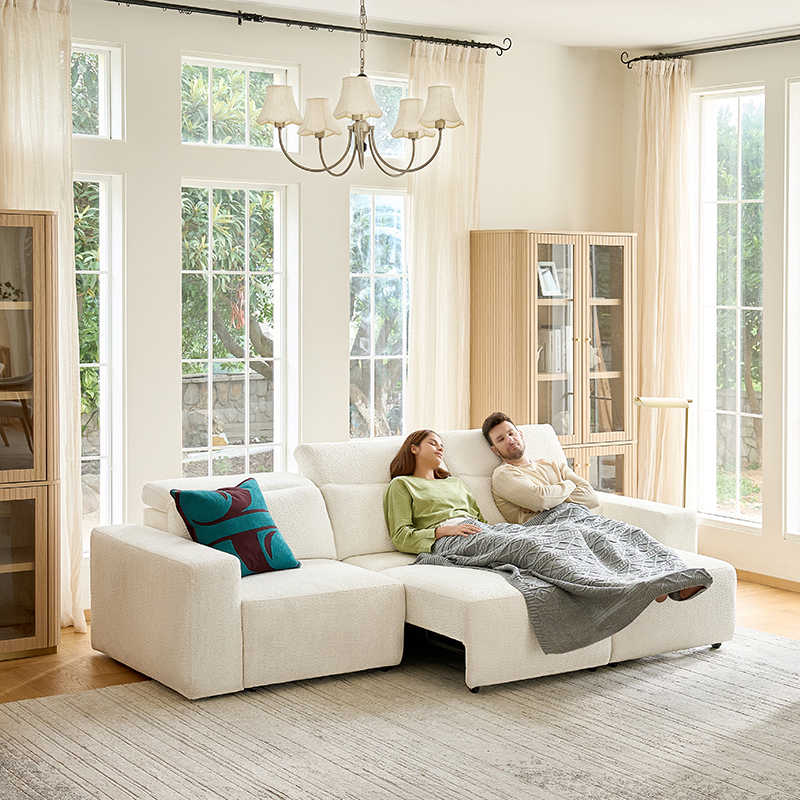
Reclining sofas: Invest in the features you will use
A reclining sofa can provide lasting value if you regularly use its adjustment features and choose a model with suitable construction.
Before buying, consider the quality of the frame, upholstery, cushions, reclining mechanism, motor, and electrical components. Ask about the warranty and the availability of replacement parts.
A sofa with features you use every day may offer better value than one with extra functions that rarely matter to you.
However, a fixed configuration can become limiting if you move to a smaller home, change your room layout, or need a different seating arrangement. Some reclining sofas are difficult to disassemble or reposition.
Modular sofas: Flexibility can extend their usefulness
A modular sofa may be a practical long-term choice when your space or household needs change.
For example:
- Moving to a new home: Rearrange compatible modules to suit a different floor plan.
- Welcoming a new family member: Add seating if the system supports compatible expansions.
- Changing the living room layout: Separate or regroup sections to create a new arrangement.
- Creating a multifunctional room: Reconfigure the seating to accommodate different activities.
These benefits depend on the product. Before buying, confirm whether modules can be purchased separately, whether individual covers or cushions can be replaced, and whether the connectors allow the arrangements you want.
This is where the idea of Adaptive Design becomes relevant. Instead of choosing furniture for only one fixed arrangement, consider how it can continue to serve your home as your routines, space, and household change.
Choose a reclining sofa for long-term value if: You prioritize dependable comfort and expect your room layout to remain relatively consistent.
Choose a modular sofa for long-term value if: You value reconfiguration, potential expansion, and the ability to adjust your seating arrangement over time.
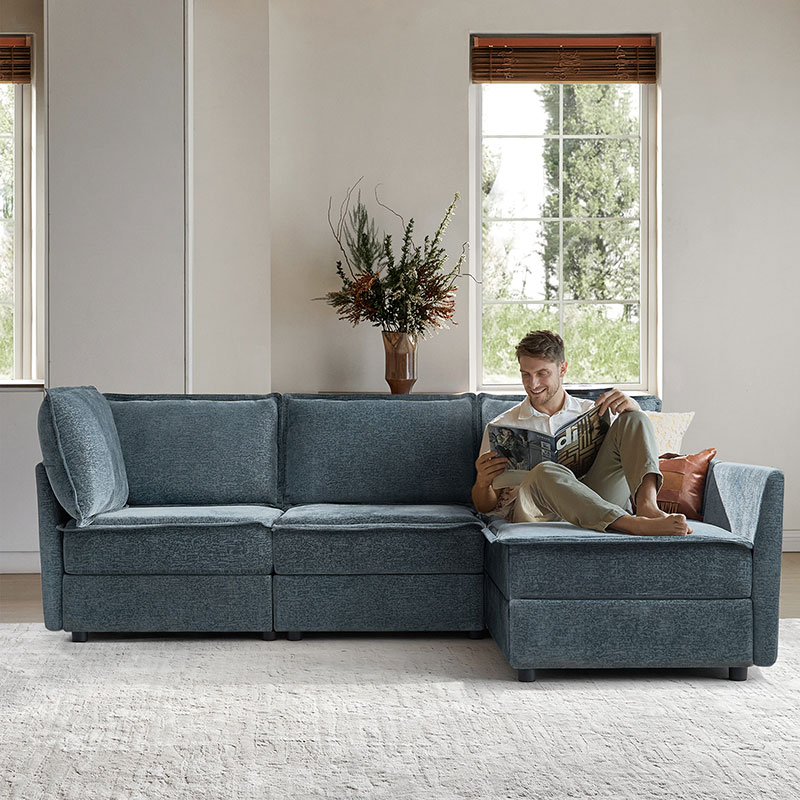
5. Reclining Sofa vs. Modular Sofa: Which Is Better for Different Households?
The best choice depends on your room, routines, and priorities. These examples can help you narrow down the options.
For couples who enjoy movie nights
A reclining sofa may be the better fit if both people want to stretch out and adjust their seats independently.
A modular sofa may be preferable if you want a wide chaise or a large shared lounging area.
For families with children
A modular sofa can be useful when several people need to sit together or when the room layout changes as children grow.
Look for durable upholstery, easy-to-clean materials, stable connections, and cushions that suit your family's daily use.
A reclining sofa can also work well, particularly when relaxation is a priority, but check the mechanism's safety features and follow the manufacturer's guidance around children and moving parts.
For people living in apartments
Neither option is automatically better for an apartment.
A compact reclining sofa may work well if there is sufficient clearance for its mechanism. A small modular sofa may be more adaptable if the room is narrow or the furniture needs to be rearranged.
Measure the room, entryways, and the fully extended footprint of any reclining model before making a decision.
For people who move frequently
A modular sofa may offer an advantage because its separate components can be easier to transport and arrange in a new home.
However, module dimensions, connection systems, and total weight still matter. Some modular sofas are bulky, and not every system can be broken down into small pieces.
For homes that serve multiple purposes
If your living room is also a reading area, occasional workspace, or entertaining space, a modular sofa may offer more layout flexibility.
If the room is primarily a place to unwind at the end of the day, a reclining sofa may better match your main priority.
6. What to Check Before Buying a Reclining or Modular Sofa
Before making a final decision, use this checklist to evaluate the actual product rather than relying on the category name alone.
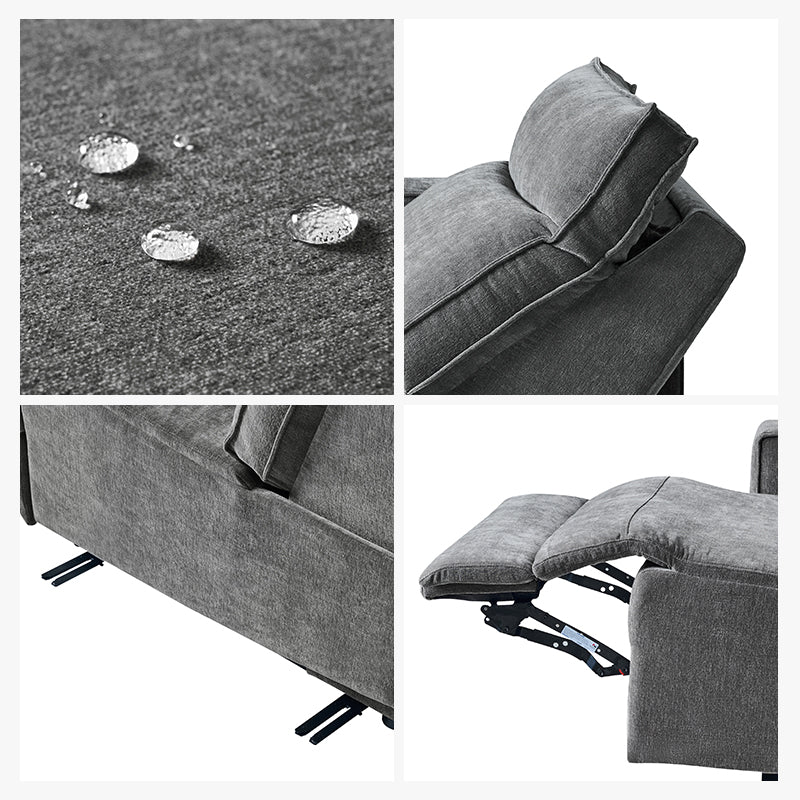
If you're buying a reclining sofa
- Reclining mechanism: Manual or power-operated?
- Adjustment options: Does it include an adjustable headrest or footrest?
- Clearance: Can it fully recline without hitting a wall or coffee table?
- Seat comfort: Does the seat depth and firmness suit your body and preferred posture?
- Maintenance: Are replacement motors or mechanism parts available?
- Warranty: What is covered, and for how long?
If you're buying a modular sofa
- Configuration options: Can the modules form the layout you need?
- Expansion: Are compatible modules available separately?
- Dimensions: Will the configuration leave enough space for walking and other furniture?
- Connections: Do the sections stay securely in place?
- Upholstery and cushions: Can covers or cushions be replaced?
- Moving: Can the modules fit through your home's entryways?
For both types, pay attention to frame construction, cushion quality, upholstery durability, delivery requirements, return policies, and the total cost of ownership.
Frequently Asked Questions
Is a reclining sofa more comfortable than a modular sofa?
Not necessarily. A reclining sofa offers adjustable seating positions, which can make it more comfortable for people who enjoy putting their feet up or leaning back. A modular sofa may offer more room to stretch out or sit with several people. Comfort ultimately depends on the specific design, cushions, dimensions, and your preferences.
Can a modular sofa have reclining seats?
Yes. Some modular sofa systems include reclining modules or reclining seats within a sectional configuration. Availability varies by manufacturer and model, so check whether the reclining components are compatible with the rest of the system.
Is a modular sofa better for a small living room?
A modular sofa can be useful in a small living room because its sections may allow more flexible arrangements. However, compact fixed sofas can also be excellent options. Compare the dimensions of the complete configuration, the available walking space, and the furniture's delivery requirements before deciding.
Which sofa is easier to move?
Modular sofas often have an advantage because they consist of separate sections that can be transported individually. Reclining sofas may be heavier or more complicated to move because of their mechanisms. The actual difference depends on the size, weight, and construction of each model.
Which sofa is better for long-term use?
Both can last for years when well constructed and properly maintained. A reclining sofa may be a better investment if you consistently use its comfort features. A modular sofa may offer greater practical flexibility if your room layout or seating needs change. Check the warranty, repair options, and availability of replacement components for either type.
Final Verdict: Should You Choose a Reclining Sofa or a Modular Sofa?
There is no universal winner in the reclining sofa vs. modular sofa comparison. Each serves a different purpose, and the right choice depends on how you want your living room to function.
Choose a reclining sofa if personalized relaxation is your priority. It is particularly well suited to movie nights, evening rest, and households that value adjustable seating.
Choose a modular sofa if flexibility matters more. It can offer more layout options, support different social settings, and accommodate changing space requirements when the system allows reconfiguration.
If you want both benefits, consider a modular sofa with reclining features, provided it fits your room and budget.
Ultimately, think beyond how a sofa looks today. Consider how you use your living room, what your household may need in the future, and which features will continue to be useful over time. The best sofa is one that fits your life—not one that forces your life to fit around it.
Related blog: