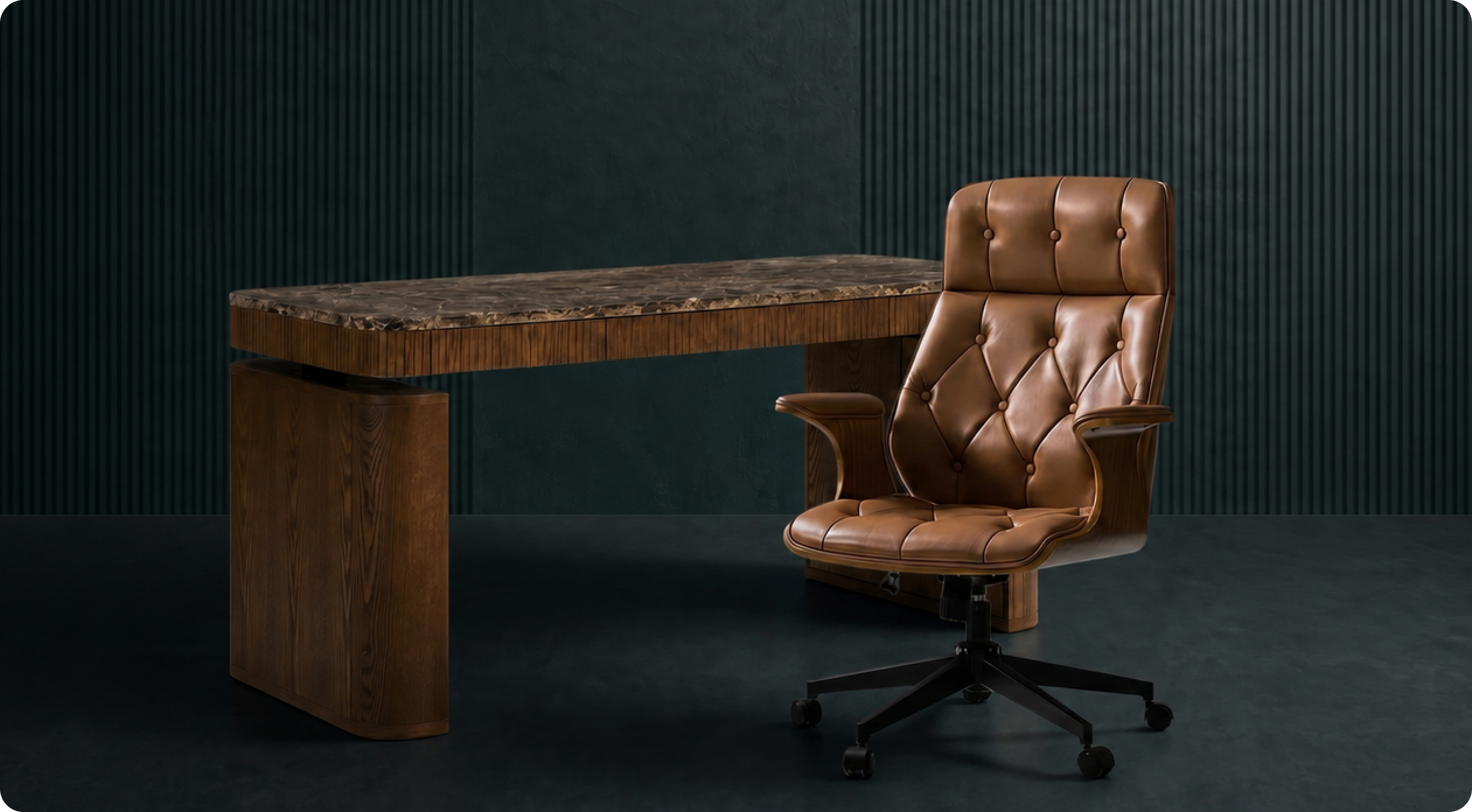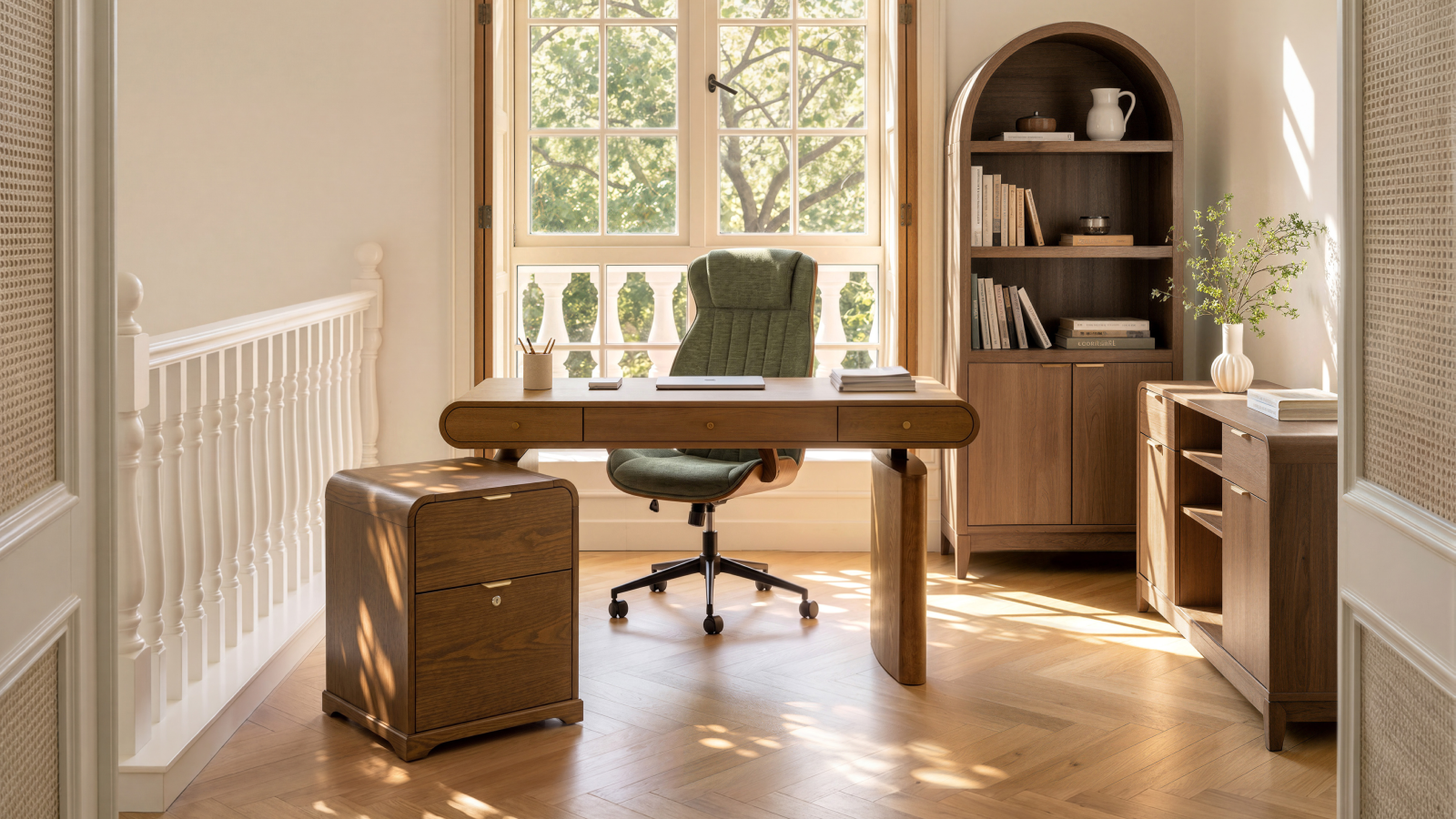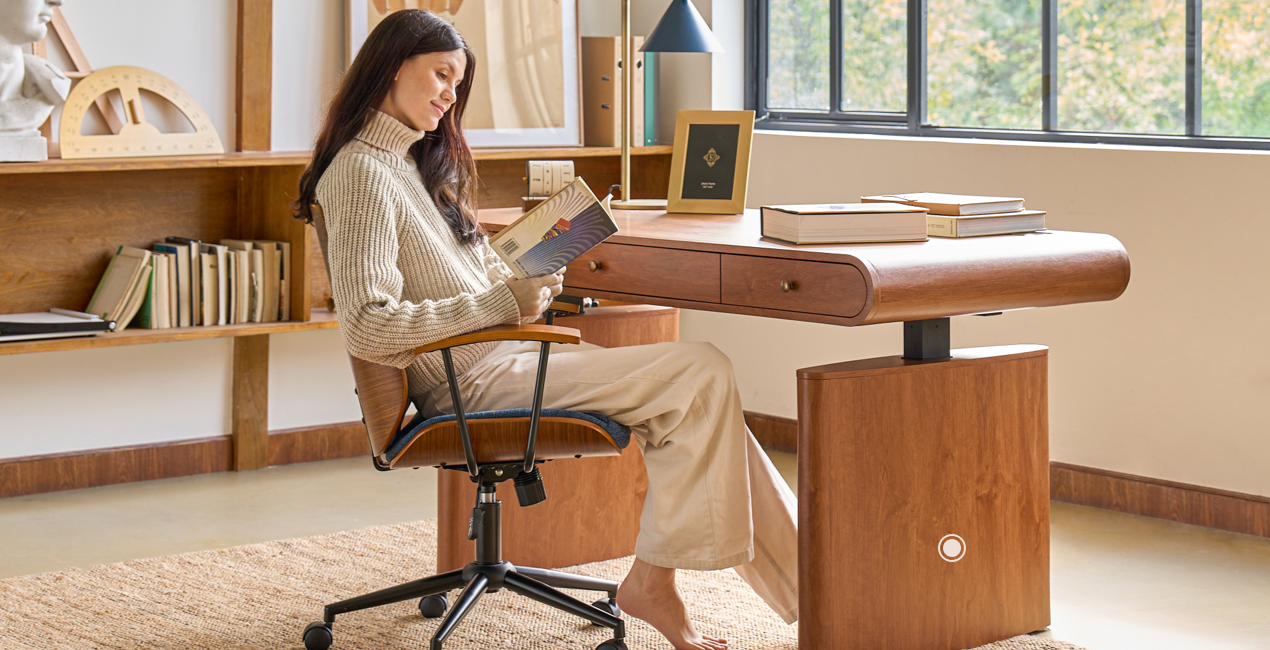
If you spend most of your workday at a desk, you have probably wondered whether standing while working is healthier than sitting. Standing desks have become a popular addition to home offices, with promises of better posture, more energy, and fewer hours spent sitting.
But are standing desks actually better than traditional desks? And if you buy one, should you spend most of your day standing?
The answer is more nuanced than you might expect. A standing desk is not automatically healthier than a sitting desk, and standing all day can create its own problems. The real benefit comes from having the flexibility to change positions throughout the day.
Whether you are setting up a home office for the first time or considering replacing your existing desk, understanding the differences can help you make a more informed decision.
What Is the Difference Between a Standing Desk and a Sitting Desk?
The main difference is whether the desk allows you to change your working height and position.
A traditional sitting desk has a fixed height designed primarily for seated work. A standing desk is designed for working while standing, although some models allow you to alternate between sitting and standing.
Understanding these differences is important because not every standing desk offers the same level of flexibility.
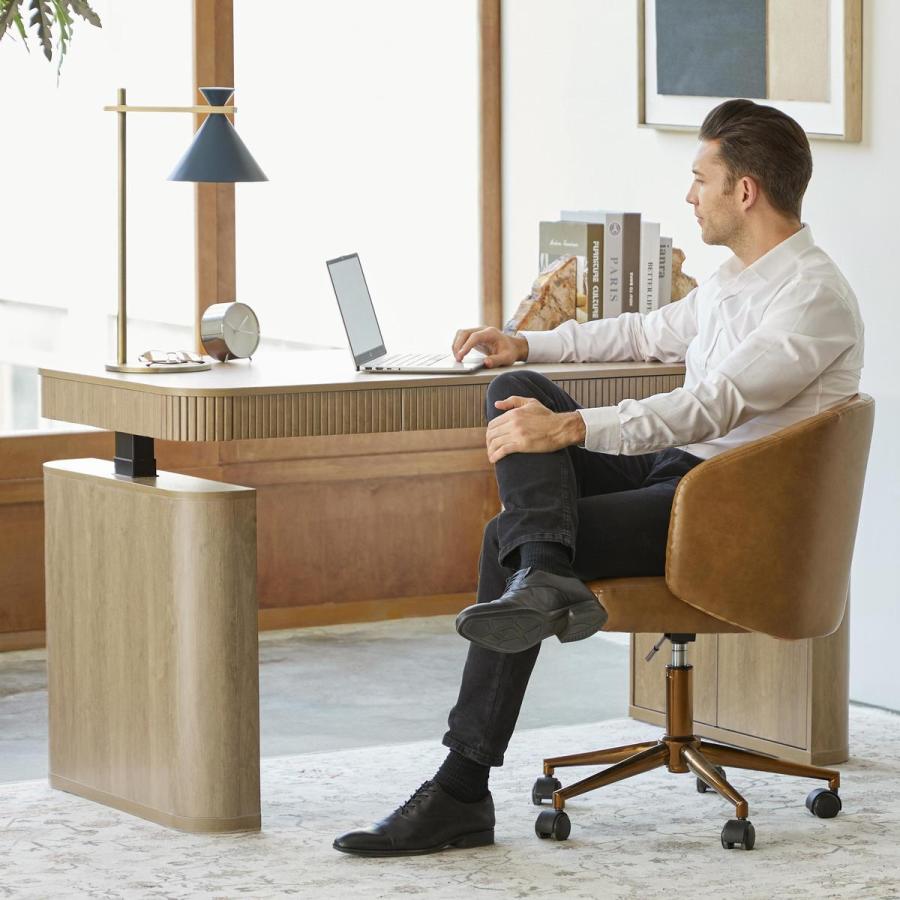
What Is a Traditional Sitting Desk?
A traditional sitting desk is a fixed-height workstation designed to be used with an office chair. It can work well for people who prefer seated work and have a properly adjusted chair, monitor, and keyboard.
Traditional desks are often straightforward to set up and can accommodate a wide range of work styles. However, their fixed height means that changing your working position may require adjusting your chair or moving to another workspace rather than changing the desk itself.
For people who spend most of their day sitting, the main consideration is whether their workspace encourages comfortable positioning and regular movement.
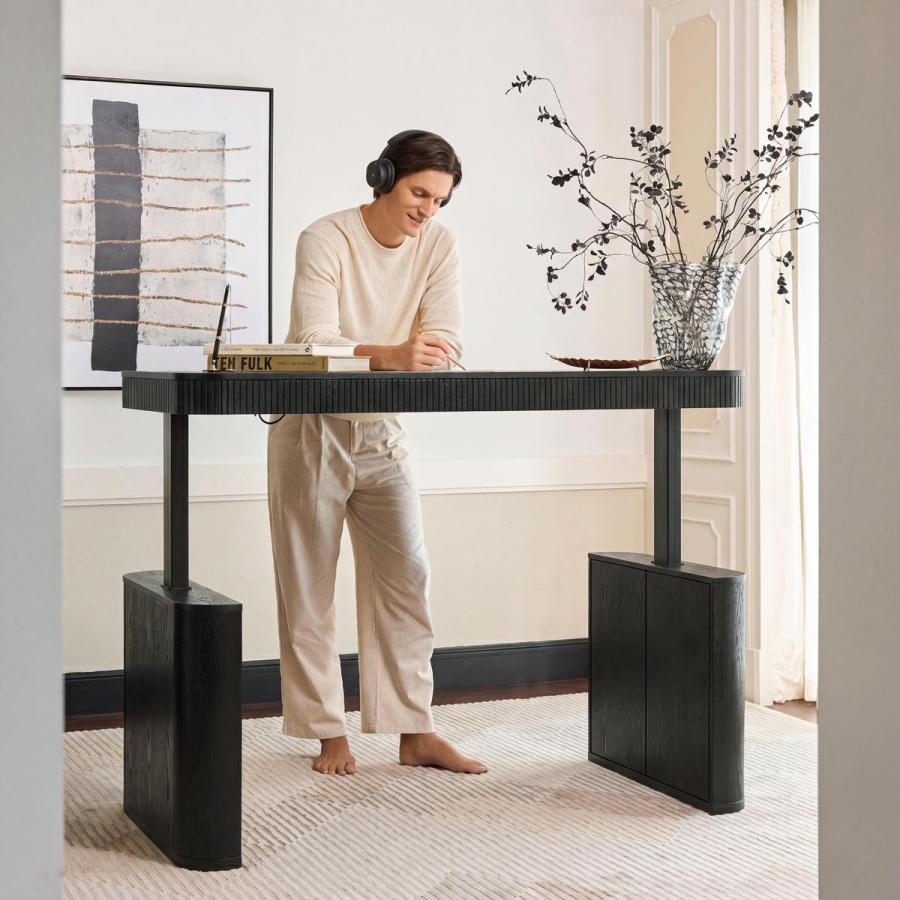
What Is a Standing Desk?
A standing desk raises the working surface to a height that allows you to use your computer or complete other tasks while standing.
There are several types:
- Fixed-height standing desks: Designed specifically for standing work, without a height-adjustment mechanism.
- Manual standing desks: Allow users to change the desk height using a hand-operated mechanism.
- Electric standing desks: Use an electric motor to raise or lower the desktop, making height adjustments easier.
An electric standing desk can be particularly useful if you want to switch positions several times throughout the day without interrupting your workflow.
What Is a Sit-Stand Desk?
A sit-stand desk is designed to accommodate both seated and standing work.
Unlike a fixed-height standing desk, an adjustable sit-stand desk allows you to lower the surface for seated work and raise it when you want to stand.
This distinction matters because the goal is not necessarily to replace sitting with standing. Instead, it is to make changing positions more convenient.
For people who work from home for several hours a day, this flexibility can be more practical than committing to one working position.
Standing Desk vs. Sitting Desk: What Are the Pros and Cons?
Neither type of desk is the right choice for everyone. The best option depends on your working habits, physical comfort, available space, and budget.
|
Factor |
Sitting Desk |
Standing Desk |
|
Working position |
Primarily seated |
Standing, or sitting and standing if adjustable |
|
Posture flexibility |
Depends on chair and workspace adjustments |
Adjustable models allow changes in desk height |
|
Prolonged use |
Long periods of sitting can be a concern |
Prolonged standing can also cause discomfort |
|
Convenience |
Simple, fixed setup |
Electric models make height changes easier |
|
Space requirements |
Depends on desk dimensions |
Adjustable models need sufficient clearance for movement |
|
Cost |
Available across a wide range of prices |
Price varies by adjustment mechanism and features |
|
Best suited for |
People comfortable with seated work |
People who want more flexibility during the workday |
Benefits of a Sitting Desk
A traditional sitting desk can be a perfectly reasonable choice for a home office.
First, sitting may be more comfortable for tasks that require precise hand movements, extended typing, or working with multiple documents. Some people also find it easier to concentrate while seated.
Second, a fixed-height desk can be a practical option if your existing chair and workstation already fit your needs. You may not need to replace a functional setup simply because standing desks are popular.
Finally, a traditional desk can be a good choice for people who prefer to invest in other aspects of their workspace, such as an ergonomic chair, a better monitor, or improved lighting.
The important consideration is not whether you sit at all, but whether you remain in the same position for too long without moving.
Benefits of a Standing Desk
A standing desk offers a different advantage: the ability to work in a standing position rather than remaining seated throughout the day.
An adjustable model provides even more flexibility.
You can raise the desktop when you want to stand, lower it when you prefer to sit, and adjust the height to suit different users. This can be particularly useful in a shared home office where several people use the same workspace.
Standing desks may also make it easier to introduce small changes into your daily routine. For example, you might stand while reading emails or attending a video meeting, then sit down when you need to focus on a detailed task.
The value is less about standing for a specific number of hours and more about having another option when your body needs a change of position.
What Are the Disadvantages of Standing Desks?
Standing desks are not without drawbacks.
Standing for extended periods can contribute to foot, leg, or back discomfort, particularly if you are not accustomed to it. A standing desk also does not automatically correct poor ergonomics. If your monitor is too low or your keyboard is positioned incorrectly, changing your working position may not resolve the underlying problem.
There are practical considerations, too. Electric models generally cost more than basic fixed-height desks, and their adjustment mechanisms require enough clearance to move safely.
Finally, buying an adjustable desk does not guarantee that you will use its features. If you rarely change the height, you may not get much additional value from the adjustment mechanism.
The best choice is the one that supports your actual working habits rather than an ideal routine you may struggle to maintain.
Is a Standing Desk Actually Better for Your Health?
This is one of the most common questions people ask before buying a standing desk.
The short answer is that reducing prolonged sitting may be beneficial, but standing should not be treated as a complete health solution.
In its article, The Truth Behind Standing Desks, Harvard Health examines several assumptions about standing desks and explains why their health benefits should not be overstated.
Does a Standing Desk Reduce the Risks of Sitting All Day?
Research has associated prolonged sedentary behavior with several health risks. This has encouraged people to look for ways to spend less time sitting during the workday.
A standing desk can help you replace some seated time with standing. However, standing still is not equivalent to walking or engaging in physical activity, and the health effects of these behaviors are not identical.
Harvard Health notes that the long-term health impact of standing desks remains uncertain for many outcomes.
This does not mean that changing positions is pointless. It means that a standing desk should be considered one possible tool for reducing sedentary time, rather than a guaranteed way to prevent disease.
If your work requires sitting for several hours, it may be more useful to consider how you can incorporate standing, walking, and other movement into your routine.
Can a Standing Desk Help You Lose Weight?
A standing desk is unlikely to make a meaningful difference to weight loss on its own.
Harvard Health cites a study in which participants burned approximately 80 calories per hour while sitting and 88 calories per hour while standing. In that study, standing for three hours burned only about 24 additional calories compared with sitting.
These figures illustrate an important point: standing uses slightly more energy than sitting, but the difference is relatively small.
If your primary goal is weight management, a standing desk should not replace regular physical activity or other evidence-based approaches.
It may help you change your working habits, but the calorie difference between sitting and standing is not a compelling reason to buy one by itself.
Is Standing All Day Better Than Sitting All Day?
No. Replacing prolonged sitting with prolonged standing is not necessarily the ideal solution.
Harvard Health warns that suddenly switching from sitting all day to standing all day can lead to back, leg, or foot discomfort. Long periods of standing can also place additional demands on the body.
A more practical approach is to vary your position according to your comfort and the task you are performing.
You might stand for a video call, sit down for detailed work, and take a short walk between meetings. You do not need to follow a rigid schedule if it makes working uncomfortable or disrupts your concentration.
The objective is to avoid remaining static for too long, not to maximize the number of hours you spend standing.
Is It Better to Sit or Stand While Working?
The answer depends partly on what you are doing.
Different tasks place different demands on your body and attention. Rather than deciding that one position is always better, consider how each position fits into your working day.
When Sitting May Be More Comfortable
Sitting can be a practical choice for tasks that require sustained concentration, precise typing, or frequent reference to documents.
It may also be preferable when you are tired or when standing creates discomfort.
The key is to establish a comfortable workstation. Your feet should have adequate support, your shoulders should remain relaxed, and your monitor and keyboard should be positioned to avoid unnecessary strain.
A well-adjusted sitting desk is not an inferior workspace simply because it does not offer a standing option.
When Standing May Be a Good Option
Standing may be worth trying during tasks that do not require you to remain in one position.
For example, you might stand while:
- Reading emails or reviewing short documents.
- Attending a video meeting.
- Listening to a presentation or conference call.
- Reviewing information on a screen with another person.
Some users find that standing helps them feel more alert or creates a useful change of pace during the workday. Others notice little difference.
These experiences are personal, so it is worth paying attention to what actually works for you.
Why Switching Between Sitting and Standing Matters
The ability to change positions is one of the most practical reasons to consider a sit-stand desk.
In an article published by the American Institute for Cancer Research, Rose Hoffman describes using an adjustable desk after experiencing hip discomfort following periods of sitting.
After more than eight months of use, she reported that alternating between sitting and standing helped alleviate discomfort associated with remaining in one position. She also described benefits for focus and collaboration, while acknowledging limitations involving desk space.
Her experience is a personal account, not proof that standing desks produce the same results for everyone. However, it illustrates how flexibility can become useful in everyday work.
The broader lesson is straightforward: you do not have to choose between sitting and standing for the entire day. You can use both when they suit your needs.
Should You Get an Electric Standing Desk for Your Home Office?
An electric standing desk may be worth considering if you want to change your working height regularly without manually adjusting your setup.
However, whether it is worth the investment depends on your habits and priorities.
Who Can Benefit From an Electric Standing Desk?
An electric sit-stand desk may be a good fit if you:
- Spend several hours a day working at a computer and want more flexibility in your working position.
- Prefer to alternate between sitting and standing without interrupting your workflow.
- Share a workspace with someone who needs a different desk height.
- Want to create a home office that accommodates changing work habits over time.
For example, a desk in a spare bedroom might serve as a dedicated workstation during the day and remain part of a multipurpose room outside working hours.
An adjustable desk can offer more flexibility in how that workspace is used, although it does not eliminate the need to plan for storage, lighting, cables, and furniture placement.
When a Traditional Desk May Be Enough
An electric standing desk is not essential for every home office.
A traditional desk may be sufficient if you are comfortable sitting, rarely need to change your working height, or already have a well-designed workstation.
It may also be a more practical option if your budget is limited or your room does not have enough clearance for an adjustable desk.
Before purchasing a new desk, consider whether your current setup would benefit more from a properly adjusted chair, a monitor stand, or more frequent movement breaks.
Buying additional furniture is not always the best solution to a workspace problem.
What Should You Look for in an Electric Standing Desk?
If you decide that an adjustable desk fits your needs, look beyond the fact that it moves up and down.
- Height adjustment range
Check whether the desk can reach a comfortable seated and standing height for everyone who will use it. The right range depends on the user's height, chair, and workstation setup.
- Desktop size
Make sure the surface can accommodate your monitor, keyboard, laptop, and other work essentials. Remember that you may need space for documents or accessories when the desktop is raised.
- Stability and lifting capacity
The desk should remain stable throughout its intended adjustment range and support the equipment you plan to place on it. Check the manufacturer's specifications rather than assuming that all adjustable desks perform equally.
- Ease of adjustment
If you expect to change positions frequently, simple controls and smooth adjustments can make the feature easier to use consistently.
- Room layout and cable management
Allow sufficient clearance for the desktop and any equipment attached to it. Plan how cables will move when the desk rises and lowers, and consider whether the workstation fits naturally into your home.
- Long-term usability
Consider warranty coverage, service support, construction, and whether the desk will remain suitable as your work habits change.
The best adjustable desk is not necessarily the one with the most features. It is the one that fits your body, work, and living environment.
How to Use a Standing Desk Comfortably
Buying an adjustable desk is only the first step. How you use it will determine whether it becomes a helpful part of your routine.
Adjust the Desk to Your Height
When sitting or standing, position the keyboard and mouse so that your shoulders remain relaxed and your elbows are comfortably positioned.
Your monitor should be at a height and distance that allow you to view the screen without repeatedly bending your neck. If you use multiple monitors, consider their placement before raising the desk.
You may need to make small adjustments to find a comfortable arrangement.
Start With Short Standing Periods
If you are new to standing desks, begin with brief periods of standing rather than trying to remain upright for hours.
Pay attention to how your feet, legs, and back feel. Gradually adjust your routine according to your comfort and work requirements.
There is no single standing schedule that suits everyone. If standing causes persistent or worsening discomfort, stop and reassess your setup rather than forcing yourself to continue.
Remember to Move, Not Just Stand
A standing desk changes your working position, but it does not replace physical activity.
Take opportunities to walk between tasks, stretch when appropriate, or step away from the screen during breaks.
You can also build movement into everyday activities, such as walking while taking a phone call when practical.
The aim is to create a more varied workday, not simply to exchange one static posture for another.
Standing Desk vs. Sitting Desk: Which One Should You Choose?
The right choice depends on what you need from your workspace.
|
Your situation |
A practical choice |
|
You are comfortable sitting and already have a suitable setup |
Keep your traditional sitting desk |
|
You want to alternate between seated and standing work |
Consider an adjustable sit-stand desk |
|
Several people of different heights share your workspace |
Look for a desk with a suitable adjustment range |
|
Your main goal is to lose weight |
Do not rely on a standing desk; prioritize appropriate physical activity and other healthy habits |
|
You have limited space or a tight budget |
Assess your current setup before investing in an adjustable model |
|
You want a home office that can accommodate changing needs |
Consider desk adjustability alongside room layout, storage, and overall usability |
A sit-stand desk is worth considering when you expect to use its adjustment features regularly. If you rarely change positions, a well-designed traditional desk may be enough.
The decision should reflect how you actually work, rather than the assumption that standing is always better.
Frequently Asked Questions
Is a standing desk better than a sitting desk?
Neither is universally better. A sitting desk can support a comfortable, well-adjusted workstation, while an adjustable standing desk offers more flexibility to change positions. For people who spend long periods at a desk, the ability to alternate between sitting, standing, and moving may be more useful than committing to either position all day.
How many hours a day should you stand at a standing desk?
There is no universally appropriate number of standing hours for everyone. Your ideal routine depends on your comfort, physical condition, and work requirements. Start with manageable periods, change positions regularly, and take movement breaks. Avoid forcing yourself to stand for long periods if it causes discomfort.
Can a standing desk help with back pain?
Some people find that changing positions helps reduce discomfort associated with remaining in one posture for too long. However, a standing desk is not a guaranteed treatment for back pain, and prolonged standing can also aggravate symptoms. Proper workstation setup and movement may help, but persistent or worsening pain warrants advice from a qualified healthcare professional.
Do standing desks burn more calories than sitting desks?
Yes, standing generally uses slightly more energy than sitting, but the difference is small. Harvard Health cites a study in which standing burned approximately eight additional calories per hour. A standing desk should not be considered a weight-loss tool or a replacement for regular physical activity.
Is an electric standing desk worth the money?
An electric standing desk may be worth the investment if you frequently switch between sitting and standing, share a workspace with people of different heights, or value convenient height adjustments. If you rarely change positions and your current desk works well, the additional cost may not provide enough practical benefit.
Should beginners choose a standing desk or a sit-stand desk?
If you are new to standing while working, an adjustable sit-stand desk is generally more flexible than a fixed-height standing desk because it supports both seated and standing work. You can experiment with different positions without committing to standing throughout the day. However, a traditional sitting desk remains a reasonable choice if it meets your needs.
Final Thoughts
Choosing between a standing desk and a sitting desk does not have to be an all-or-nothing decision.
A traditional desk can be a good choice when it supports comfortable seated work. An adjustable sit-stand desk offers another option for people who want to change their working position throughout the day.
The important distinction is between buying a desk because standing seems healthier and choosing one because its features genuinely support your routine.
At home, furniture needs to work around real life: changing work schedules, different users, limited space, and evolving priorities. A workspace that can adjust to those needs may offer more lasting value than one designed around a single way of working.
Rather than asking whether you should sit or stand all day, consider a more useful question: How can your workspace make it easier to work comfortably, move regularly, and adapt to the way you live?
Related blog:
Modern and Contemporary Home Office Furniture Trends for 2026
Are Massage Office Chairs Worth It? What to Know Before You Buy